Sea-Going Ship Design: Class Standards, Engineering Calculations & VR Approval
Technical guide to sea-going ship design under Vietnam Register (VR), SOLAS, and MARPOL rules: hull lines, longitudinal strength, stability, and approval stages.
In commercial maritime transport, sea-going ship design determines capital efficiency (CAPEX), fuel burn (OPEX), and structural reliability throughout a vessel’s service life. Compared with sheltered river craft, coastal and ocean-going ships face severe wave bending moments, green-water loads, and strict statutory class oversight.
Since 2002, Loyal Ship Consulting & Design Co., Ltd. has partnered with Vietnamese shipowners and shipyards to deliver class-ready ship design and naval architecture dossiers verified against national and international maritime codes.
Operational Areas and Statutory Rules in Sea-Going Ship Design
Before fairing hull lines or sizing scantlings, naval architects establish the vessel’s operational envelope under Sea-Going Ship Classification Rules:
- Unrestricted Ocean-Going Service: Requires full compliance with Vietnam Register (VR) national technical rules alongside applicable IMO conventions including SOLAS, MARPOL, and the International Load Line Convention (ILLC).
- Restricted Coastal Zones (I, II, III): Calibrated for coastal routes within defined offshore distances or shelter limits, optimizing steel weight and lifesaving equipment without sacrificing structural margins.
Selecting the proper operational notation early prevents over-building steel weight while securing trouble-free statutory approval.
Four Core Engineering Pillars for Sea-Going Vessels
1. Hull Form Optimization and Hydrodynamics
Hull geometry governs wave-making resistance, seakeeping motion, and wake flow into the propeller. Modern sea-going designs integrate bulbous bows tuned to service speed alongside clean stern run lines to cut propulsion power demand.
2. Longitudinal Hull Girder and Local Strength
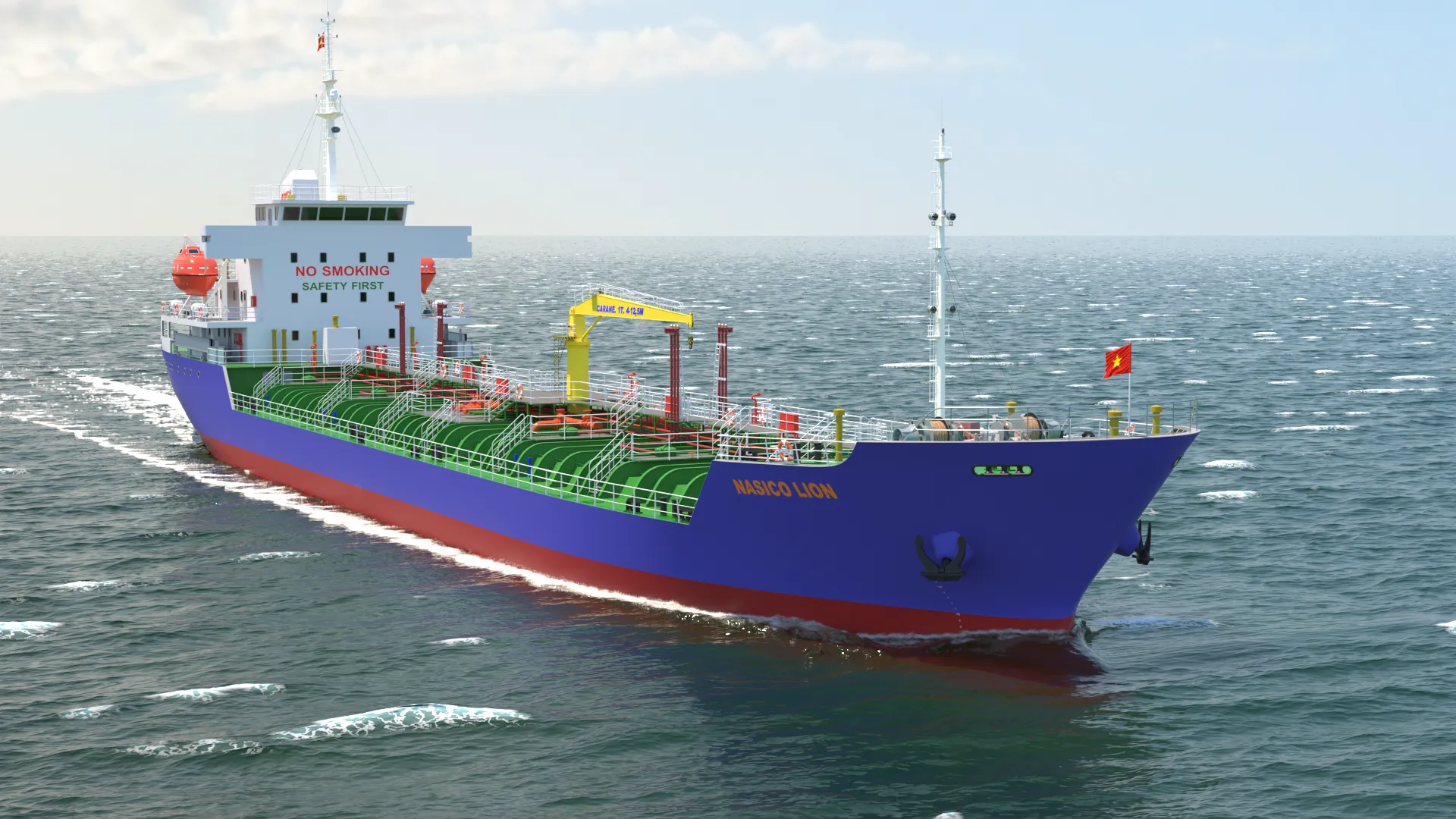
In open-sea swells, a ship hull alternates between hogging and sagging bending moments. Approval dossiers calculate section modulus, shear capacity, double-bottom framing, and double-hull plating — critical for oil and chemical tankers such as NASICO LION.
3. Intact and Damage Stability Verification
Every sea-going ship must satisfy intact stability across full-load, departure, arrival, and ballast conditions, severe wind-and-rolling weather criteria, plus compartment flooding survival for passenger & Ro-Ro ferries and liquid cargo carriers.
4. Propulsion, Piping, Fire Safety, and Lifesaving Systems
Main propulsion, independent emergency power, ballast and fire mains, 15 ppm oily-water separators, survival craft arrangements, and structural fire protection zones must be coordinated inside the General Arrangement so crews can operate and maintain systems safely.
Four-Stage Engineering and Vietnam Register Approval Workflow
A complete sea-going ship design package progresses through four clear phases:
- Concept & Owner Briefing: Align deadweight, speed, draft, propulsion power, and General Arrangement with commercial route targets.
- Basic Design & Class Approval: Produce hull, machinery, electrical, stability, and strength calculations for Vietnam Register (VR) statutory review.
- Production Engineering & CNC Nesting: Develop 1:1 lofting, shipyard block breakdown suited to slipway crane capacity, and CNC plate-cutting files.
- Inclining Test, Sea Trials & As-Built Dossier: Verify lightship center of gravity post-launch, record speed and endurance trials, and issue final statutory booklets.
Sea-Going Naval Architecture at Loyal Ship Design
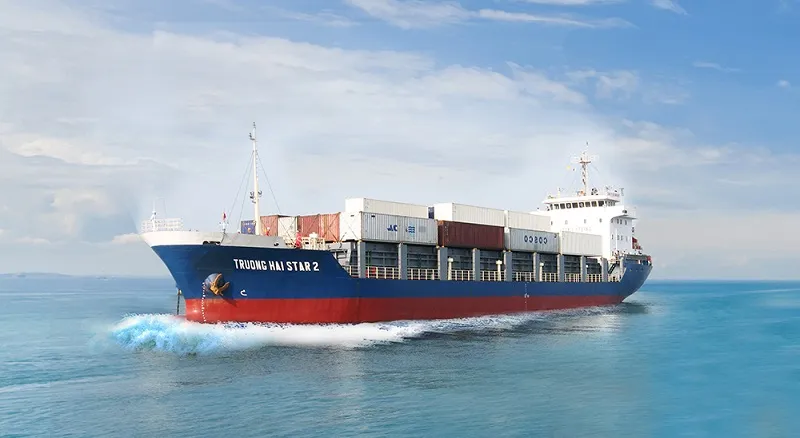
Our hull, machinery, and electrical engineers provide end-to-end ship design consulting, shipyard construction supervision, and technical quality appraisal across general cargo ships (including Truong Hai Star 2), container feeders, product tankers, and coastal ferries.
For preliminary sizing, steel weight checks, or sea-going newbuilding engineering, contact Loyal Ship Design to speak directly with our naval architects.