Inland Waterway & VR-SB Ship Design: Shallow-Draft Payload & Rules
Engineering guide to inland waterway (SI/SII) and river-sea (VR-SB) ship design in Vietnam: shallow draft, bridge air-draft, barge trains, and VR rules.
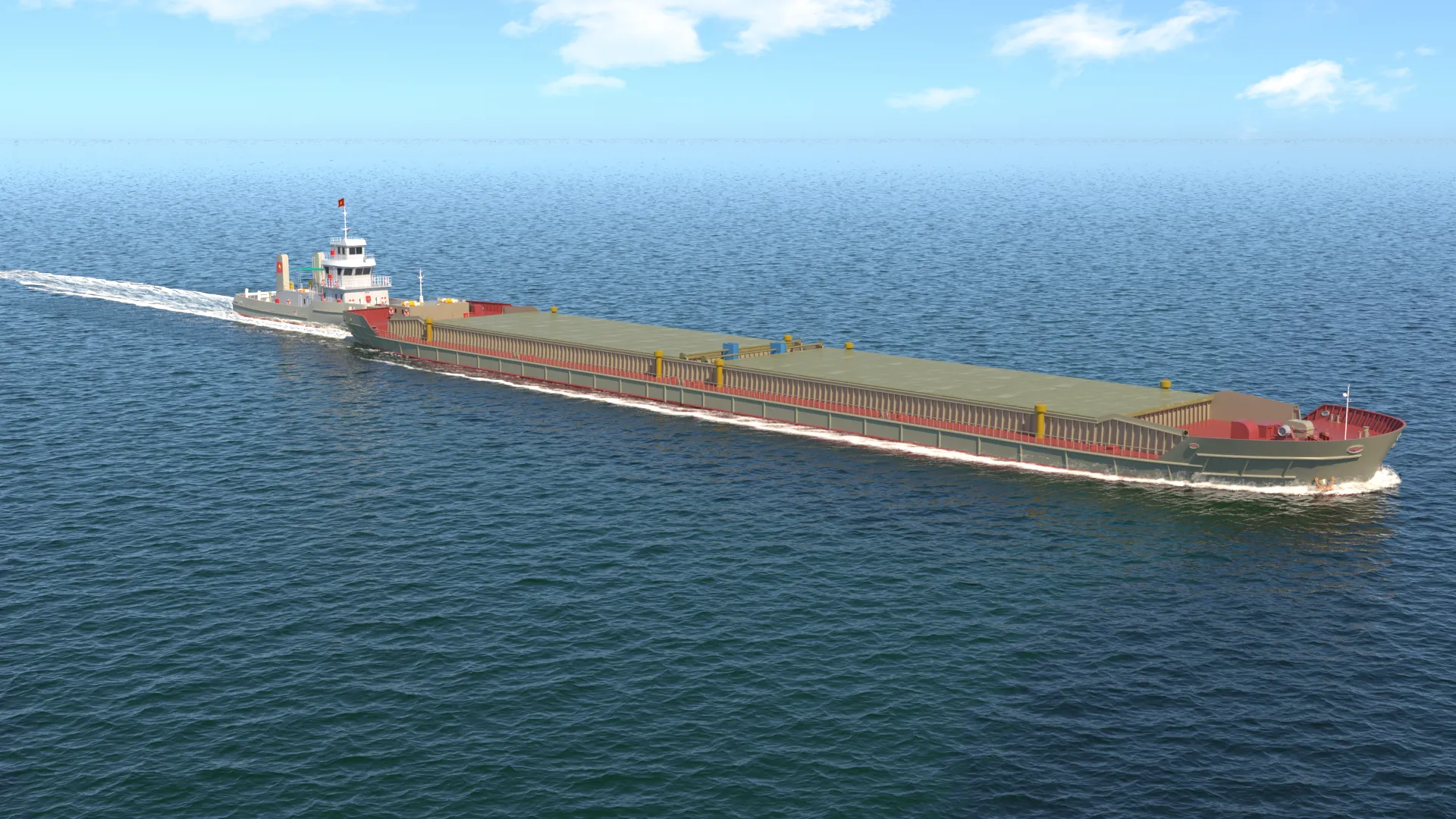
Inland waterway freight and coastal VR-SB corridors anchor bulk material, coal, cement, agricultural, and container logistics across Vietnam. Building profitable vessels for shallow rivers and nearshore sea corridors depends on specialized inland waterway ship design that balances draft limits, bridge air-draft, and maximum cargo payload.
For over two decades, Loyal Ship Design has engineered inland and VR-SB vessel designs spanning dry cargo carriers, self-propelled container barges, bay cruise vessels, and 1,200T–6,000T articulated barge convoys.
Understanding Inland (SI/SII) vs. Coastal River-Sea (VR-SB) Classes
Under Inland Waterway & VR-SB Regulations, each operating scope drives distinct naval engineering criteria:
- Inland Classes SI & SII: Tailored for rivers, canals, reservoirs, and sheltered estuaries with lower design wave heights, allowing lighter hull plating and optimized freeboard.
- Coastal River-Sea VR-SB: Authorizes inland-registered vessels to transit designated coastal corridors linking Red River and Mekong Delta ports with coastal seaports across Vietnam.
Because VR-SB ships encounter nearshore sea states, designs require strengthened deck and side scantlings, calibrated SB freeboard, higher hatch coamings, weathertight hatch covers, and mandatory AIS/VHF navigation suites.
Four Engineering Priorities in Inland & VR-SB Ship Design
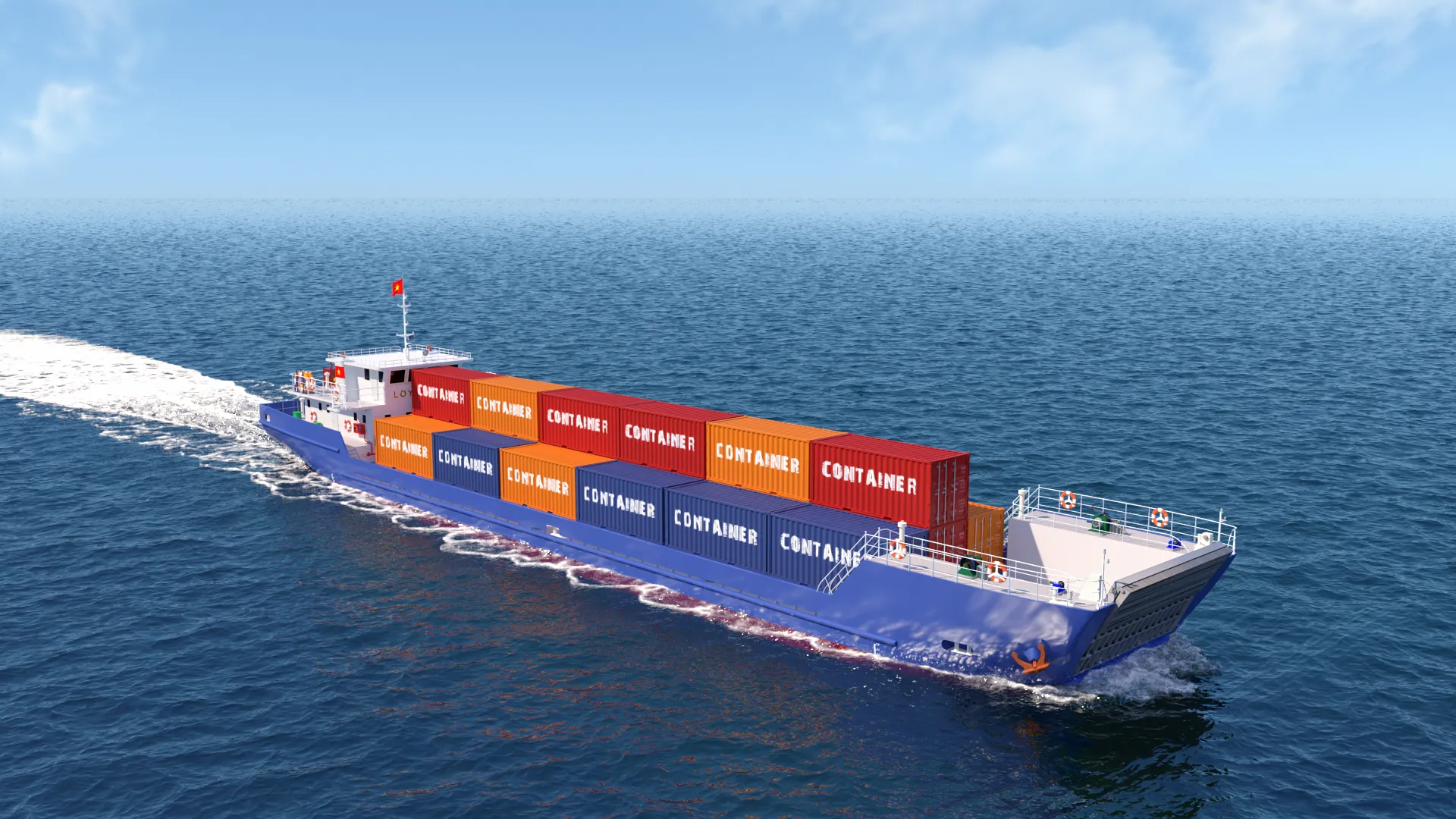
1. Shallow-Draft Hull Fullness and Propulsion Matching
River channels restrict maximum draft seasonally. Naval architects widen beam ($B$), tune block coefficient ($C_B$), and refine stern tunnel/nozzle flow so propellers deliver full thrust without bottom suction or excessive squat in shallow water.
2. Bridge Air-Draft Clearance and Forward Sightlines
Low river bridges limit superstructure height. Designs incorporate folding masts or hydraulically elevating wheelhouses while verifying bridge blind-sector sightlines over stacked bulk cargo or multi-tier container bays.
3. Coupled Pusher Tug and Barge Train Hydrodynamics
For high-capacity tugs and VR-SB barge convoys such as the Vi Sơn 25 (4×1,200T) and Ninh Thắng 01 (6,000T) convoys built at Phà Rừng Shipbuilding, bow-stern alignment and coupling geometry directly reduce wave interaction drag and improve river bend maneuverability.
4. Heavy Berth Fendering and Grab-Impact Tank Tops
Inland vessels routinely berth at simple river wharves and unload with heavy grabs. Reinforced tank tops, heavy hull fendering, and wide box-shaped hatch openings speed cargo turnaround and cut hull maintenance.
Inland & VR-SB Design Services at Loyal Ship Design
Loyal Ship Design provides full ship design consultancy for newbuildings and conversions across:
- Dry Cargo & Bulk VR-SB Vessels
- Tugs & 1,200T–6,000T+ Barge Convoys
- River-Sea Self-Propelled Container Ships
- Bay Tourist Cruises & Yachts
Alongside Vietnam Register approval packages and CNC workshop drawings, our engineers offer shipyard QA/QC supervision and pre-investment technical appraisals.
To discuss shallow-draft sizing or a new inland / VR-SB ship design project, contact Loyal Ship Design or call +84 24 2241 2850.